
Bachelor in music performance

RésoNAnces is accredited to deliver the bachelor in music performance

Become musician performer

Presentation


The program

The bachelor in performance (DNSPM) is an undergraduate degree recognizing higher education in music performance.

This is a level 6 degree equivalent to a bachelor’s degree as of June 2026. The program is structured over 6 semesters, with a first year of “core curriculum” (DE / DNSPM). It corresponds to 3 years of higher education and the completion of 180 ECTS credits.

Code RNCP : 37687
Date d’enregistrement de la certification : 07-06-2022
Certificateur : ministère de la Culture

Profession and proposed pathways

The path to becoming a performer leading to the degree opens the door—depending on musical styles and instrument families—to careers as a performing musician, whether as a soloist or in an orchestra; as a musician in various instrumental ensembles or chamber music groups; as a stage musician for live performances; or as a studio musician.
The program aims to train artists with strong employability by diversifying their skills to meet the demands of music outreach and production.

Organisation and duration

Tools for better professional integration : musician, a multi-faceted career
The performance training program is designed to help students adapt to the realities of today’s music profession. To this end, it incorporates a wide range of skills essential for professional integration. The first year of the program, which is common to both the performance and instrument/vocal pedagogy bachelors, offers workshops focused on teaching, outreach, group instruction, and promotion, providing each student with the tools needed for the rest of their academic journey. The bachelor program also allows students to pursue graduate-level (master’s) studies in performance in France or abroad.

parcours-etudes-musique
Je candidate

Curricula

The program is organized into 5 course units (“unités d’enseignement”- UE), aligned with the french national professinal framework. See the full curriculum (coming soon) for details on the courses.

UE1 : Artistic practice


Contents

The artistic practice course unit helps students develop or refine a personal and independent musical and artistic approach. Courses in core repertoires and ensemble practice reinforce students’ dominant aesthetic and expand its boundaries (repertoires, instrumental skills, tools).

UE2 : Artistic culture


Contents

This course unit reinforces cultural and artistic knowledge. It strengthens students’ connection to current trends in their artistic practice and develops their sensitivity to other art forms and musical aesthetics.

UE3 : Specific skills by study department 


Contenus

The specific skills course unit aims to develop students’ skills by exposing them to the realities of other pathways. The goal is to provide them with hands-on experience of what it’s like to be an orchestral musician in a variety of contexts, while fostering connections and synergies among the different academic departments.

UE4 : Complementary artistic practices


Contents

The complementary artistic practices helps students to better understand and use their bodies, as well as the various tools available to them in their work as interpreters. It enhances their poise and posture, while expanding their knowledge of sound recording equipment.

UE5 : Territorial and professional environment


Contents

This unit provides an overview of the main contemporary issues and challenges facing the interpreting profession in France and internationally. It thus helps students transition into the workforce.

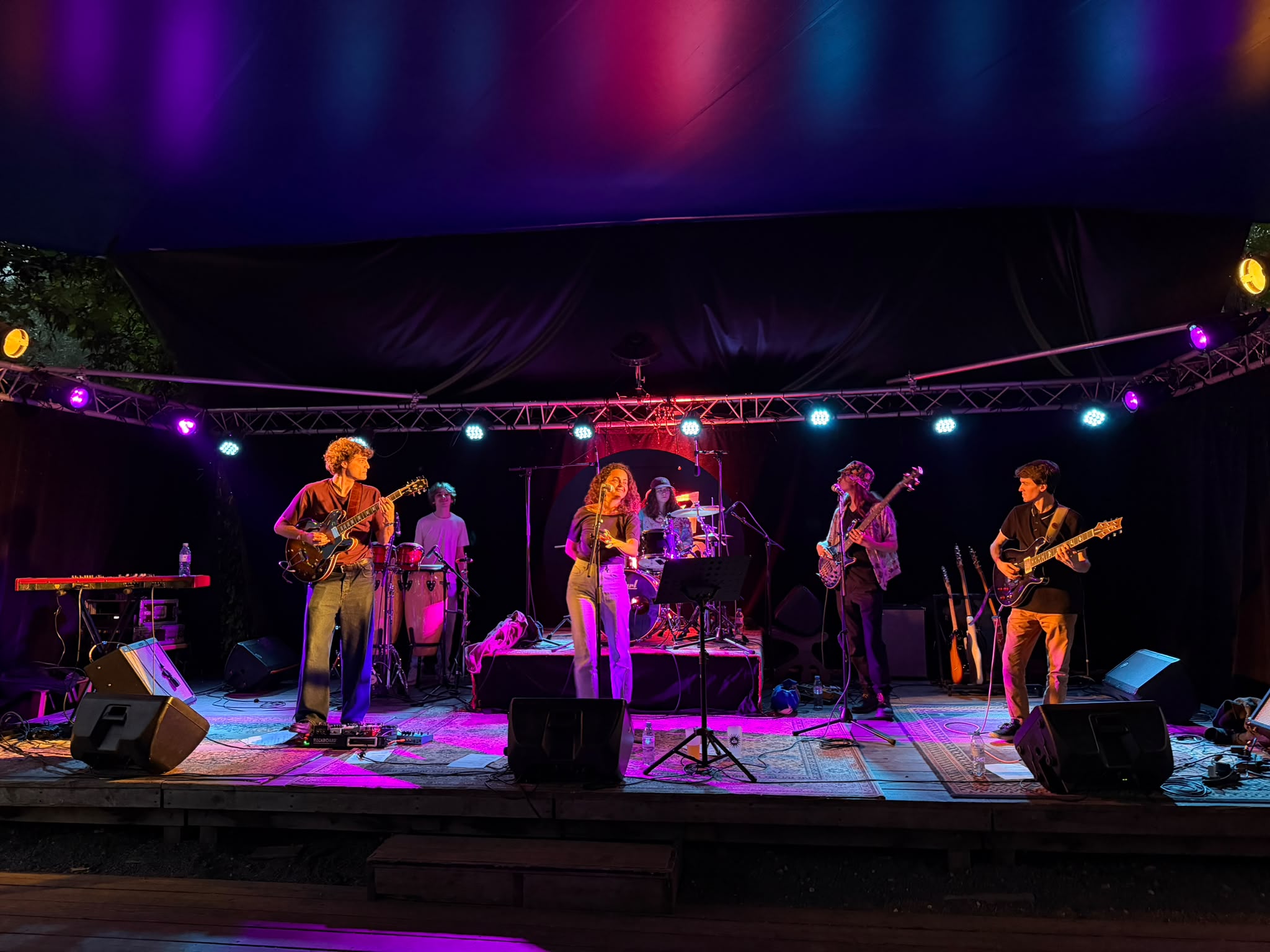


Contents of the program are structured from artistic and pedagogical partnerships, projects.

Artistic and pedagogical partnerships

This section is being updated.


Study departments

The program is currently open in the following study departments

Highlights

Throughout its path, each student has 30 hours of individual instrumental course ; instrumental improvement and repertoire knowledge have an important place in the program. Pedagogical team for instrumental courses are qualified teachers, all committed in artistic careers, offering a strong professional dynamic. Masterclasses are organized each semester with guest artists and are fully part of the program. Collective practice, directed of not, is also a core subject of the curricula, with a pedagogical organisation structured by study department for weekly schedules or for sessions per semester.

Several intensive chamber music sessions are organised every year. An immersive approach allows each student to start with its instrumental main repertoire culture and to develop its skills on unusual repertoire and uncommon ensembles.
These projects are real professional immersion experiences as they are produced whithin the same frame of professional expectations.
Students also experience professional environement internships in professional ensembles or cultural organisations to acquire solid professional competences and broadens their network.

RésoNAnces aims to train performing artists open to the world, curious, capable of engaging with other art forms, able to put their instrumental practice into perspective, and capable of making connections with other artistic practices (film, live performance, etc.).

The music performance bachelor is designed to help students in adapting themselves to the realities of a musician’s career. To this end, it incorporates a wide range of skills essential for entering the workforce. The first year of the program, which is common to both the performance and instrumental/ vocal pedagogy bachelor, offers workshops focused on teaching, outreach, group instruction, and promotion, to provide each student with the tools they need for the rest of their academic journey.

Studying abroad for part of your degree program through the Erasmus+ program is a transformative experience that allows you to improve your proficiency in a foreign language and discover a foreign repertoire as well as a different educational and artistic culture.

Pedagogical team

More

Candidates who hold a baccalaureate or a French or foreign diploma (recognized as equivalent or exempt from the requirement) may take the entrance exam if they:

  • Either can demonstrate that they have completed a program preparing them for admission to higher education institutions in the field of artistic creation, specializing in music, offered by an institution authorized to provide such training;
  • Or hold the national diploma provided for in Article L. 216-2 of the French Education Code, or a national diploma in professional orientation for musicians (DNOP), or a diploma in musical studies (DEM), or a foreign diploma of equivalent level.

Candidates who do not meet the above requirements may, following the recommendation of an application review committee, obtain a waiver from the institution’s administration allowing them to take the entrance exam.

In this case, it is particularly important to provide precise details and supporting documentation regarding the applicant’s education and experience.

Training programs are accessible through initial training, apprenticeship, continuous professional training, and the recognition of prior learning (Validation des Acquis de l’Expérience).

Initial training is intended for individuals who have never interrupted their studies, whilst continuous professional training is meant for individuals who have completed a course of study, have entered the workforce, and wish to resume their studies. These two categories result in different funding for the training but do not alter the content or organization of the curriculum.

Know more about ways of access

For the 1st year (tronc commun) : 300€.

For the bachelor in music performance and the bachelor in instrumental/vocal pedagogy :  

  • tuition for one program : 300€ 
  • tuition for both programs : 500€

Students receiving scholarships are exempt from tuition, but must pay the registration fees.
Erasmus+ students don’t pay tuition fees but registration fees : 130€

Graduation rates :

  • In 2020, the DNSPM pass rate was 92%.
  • In 2021, it was 93%.
  • In 2022, the rate was 100%.
  • In 2023, the pass rate was 70%.
  • In 2024, it was 77%.
  • In 2025, the DNSPM pass rate was 95%.

Professional integration :
RésoNAnces leads surveys of its graduates to track their transition into the workforce. What are they doing now? How many are continuing their studies? How many are employed? What kind of positions do they hold? What challenges do they face? How satisfied are they with the program they completed? View the results of the surveys conducted among graduates for both bachelors :

-9 months after graduation:

Any person with a disability may request adjustments to their training course to compensate for the disability if it hinders their ability to complete the training (see Article L. 5211-2 et seq. of the French Labour Code). Please contact the disability coordinators: Catherine Barbosa ou Caroline Follana.

For further informations about the bachelor in music performance, contact the music department.