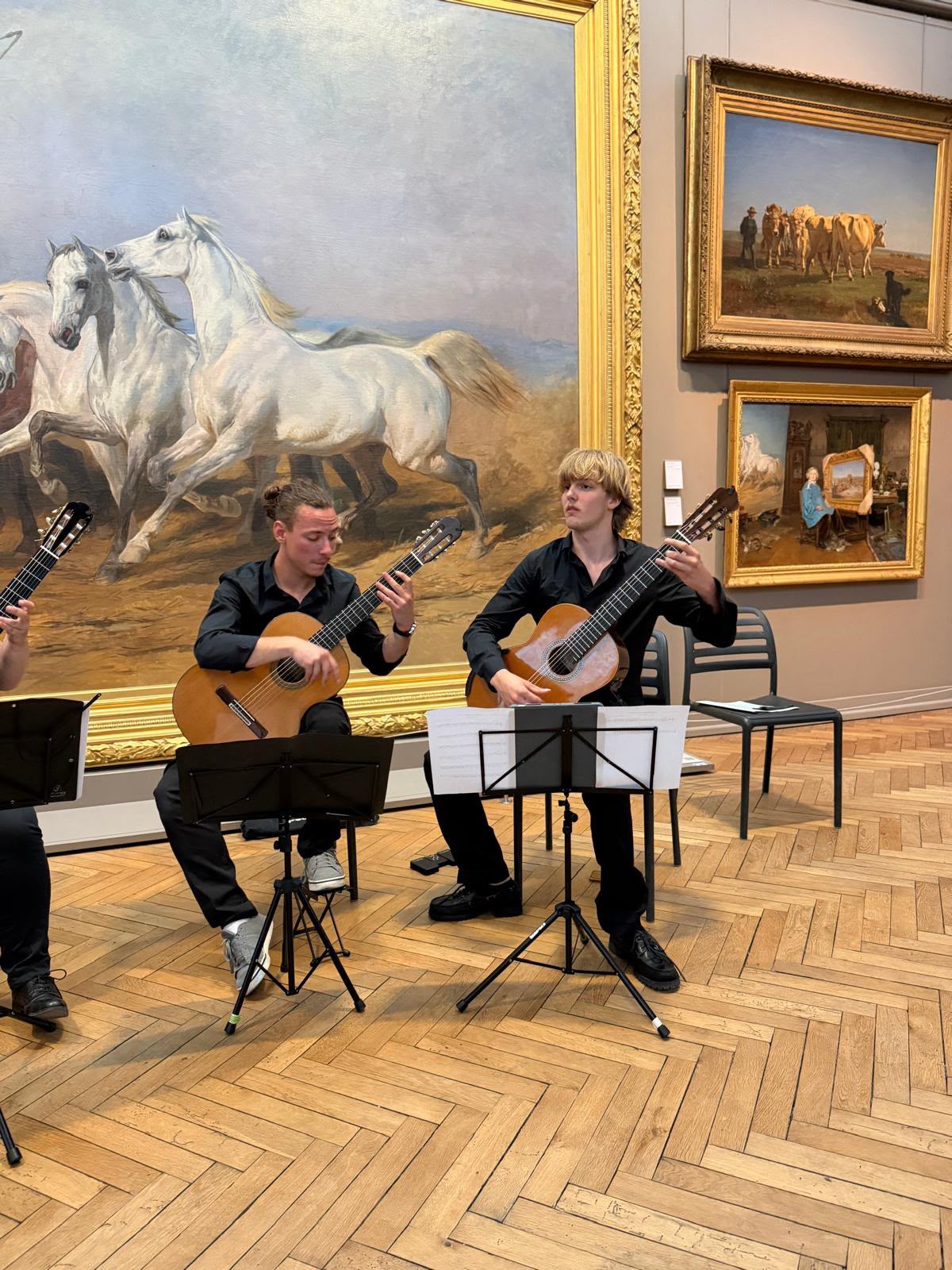
Polyphonic instruments department
Harp, accordion, classical guitar

Presentation
For these three instruments that requires, perhaps more than any others field, a genuine ability to diversify one’s scope, the department’s teaching team aims—beyond a high level of instrumental mastery—to develop the students’ musical culture, broaden their repertoire significantly, and build a wide variety of artistic connections.
A career as a professional musician offers a wide range of activities:
- Orchestral, instrumental or vocal ensemble musician
- Chamber music
- Performing arts, cross-disciplinary artistic projects (music, dance, theater, etc.)
- Teacher-musician, teacher in conservatoires or associative music school professor (bachelor in intrumental and vocal pedagogy)
To support students in achieving the best possible professional integration, specific courses linked to instrumental practice are integrated into the curriculum to expand their skill set:
- Accompaniment techniques
- Repertoire study: broadens students’ knowledge of the repertoire in conjunction with historically informed performance
- Musical writing, orchestration, and introduction to composition
- Organology studies
Despite sharing polyphony as a common feature, the unique characteristics of each instrument are highlighted throughout the program to provide these developing artists with the most comprehensive training possible:
Accordionists deepen their study of organology specific to their instrument as well as sight-reading techniques.
Harpists benefit from orchestral excerpt classes and sight-reading to equip them with the necessary tools for orchestral playing.
Guitarists engage in comparative listening to recordings and specialized sight-reading.

Teaching staff
Aurélie Saraf
Harp

Antoine Morinière
Guitar
Bruno Maurice
Accordion
Éric Cassen
Chamber music
Emmanuel François
Chamber music
Marie-Bernadette Charrier
Chamber music
Caroline Bacou
Classical Guitar Instruction
Thibaut Roussel
Baroque repertoire culture
Samuelito
Flamenco repertoire culture
Find out more