Early music department

Presentation
The department offers training in performing repertoires from the Middle Age to the late Baroque period. Depending on the instruments, training inclueds later and contemporary repertoires.
Complementary courses (Early music theory, basso continuo, tuning and temperament, early music history and culture, etc.) help students build a deep understanding of these repertoires, bonding this comprehension with performance and artistic practice.
Dedicated sessions and special projects, led by pedagogical team and guest artists, leading to public performances. Several sessions are organized in partnership with specialized ensembles, other study departments, or higher education institutions across France and Europe.
A monthly seminar, the Early Music Lab, brings together all students and multiple faculty members to explore the connections between culture, research, and performance practice.
Strong emphasis is placed on autonomy and research preparation (treatises, repertoire research, historical context, organology, music editing, etc.), empowering students to develop an individualized approach that reflects current developments in early music.
Courses brings to students practical, career-oriented tools: program and project design and presentation, legal frameworks, networking with industry professionals, and developing promotional materials to pitch artistic projects to targeted presenters.
Professional immersion internships provide students with hands-on experience in professional settings, boosting their career readiness.
The joint Master’s degree “Music: Research and Ensemble Performance” (MRPE)—offered by the Universities of Poitiers and Tours in partnership with RésoNAnces and the Abbaye aux Dames in Saintes—is designed for students who wish to combine high-level performance training with musicological research.
Instruments :
- 3 harpsichords (Titus Crijnen about Couchet and Giusti, Patrick Chevalier about Hemsch)
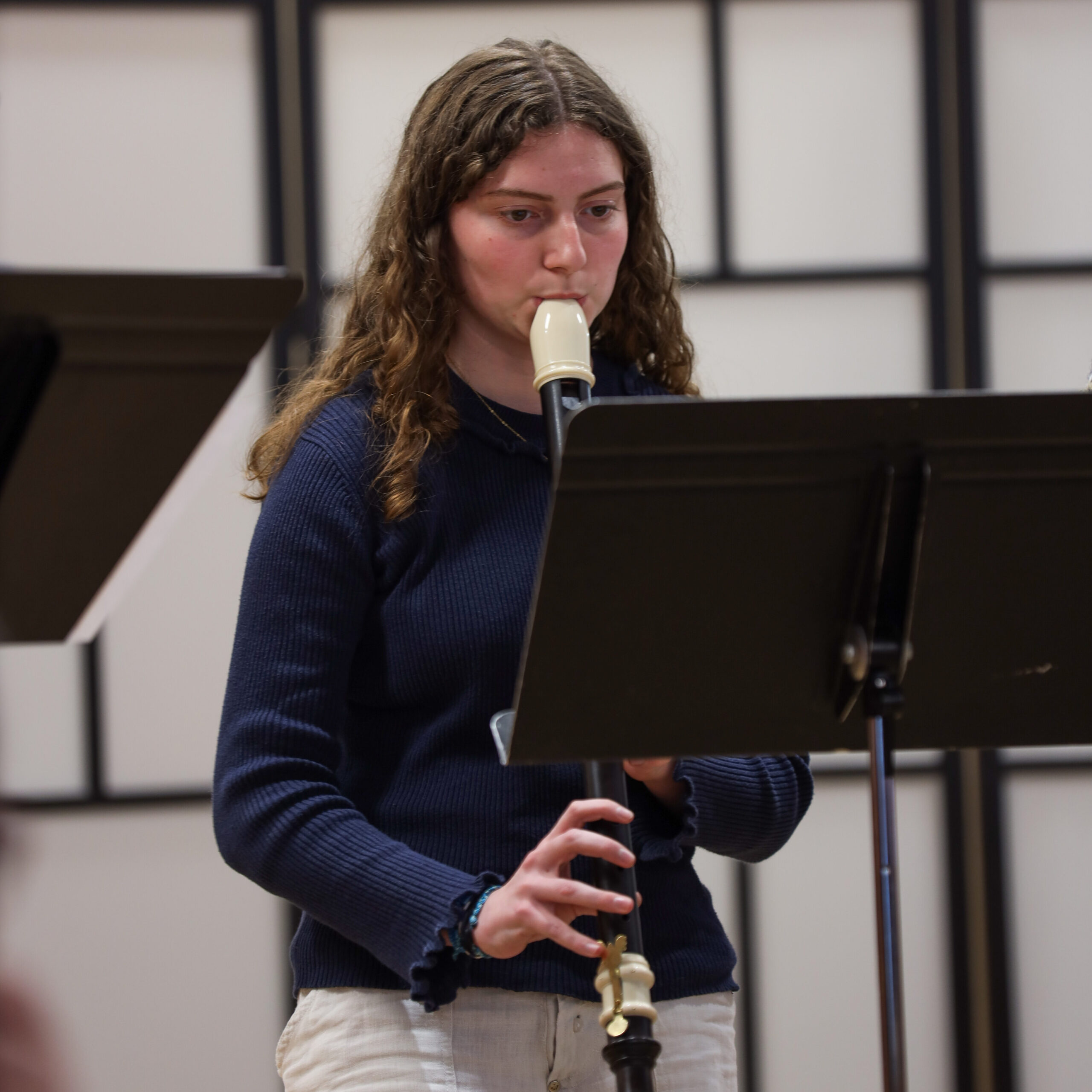
- ensemble of 11 recorder flutes (Francesco Li Virghi about Rafi)
- 2 crossbeams
- 2 violins
- 1 alto
- 1 violoncello da spalla
- 1 organ (Quentin Blumenroeder, about a 17th-century Italian organ)
- 1 pianoforte (Benjamin Renou, d’après Walther)
Thanks to the partnership with the Grand Poitiers Conservatoire and the University of Poitiers, students have access to two chamber organs, three harpsichords, a consort of 20 recorders (built after Praetorius and Rafi models), as well as organs across the city of Poitiers (including Notre-Dame la Grande and Saint-Pierre Cathedral).
Teaching staff
Claire Michon
Department coordinator
Recorder

Romain Bockler
Singing
Anne Delafosse
Singing
Claire Daniel
Recorder
Delphine Leroy
Traverso
Aurélien Delage
Traverso
Judith Pacquier
Cornetto
Marie Rouquié
Baroque violon
Pascal Dubreuil
Harpsichord
Sébastien Wonner
Harpsichord
Matthieu Lusson
Viola da gamba
Mathilde Vialle
Viola da gamba
Thibaut Roussel
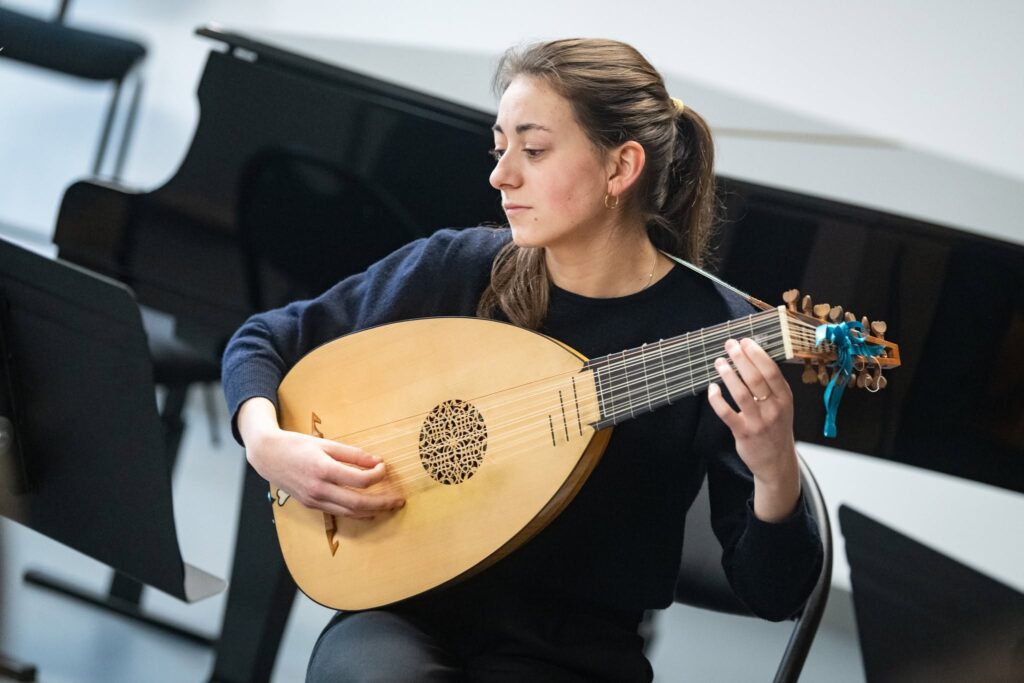
Lute and theorbo
Marion Middenway
Baroque cello
Olivier Houette
Organ
Louis Noël Bestion de Camboulas
Harpsichord, basso continuo, chamber music
Amandine Beyer
Guest artist
For other instruments, the instrumental instructor is chosen by the department coordinator based on the student’s current skill level, their technical development needs, and their artistic project.
Arnaud De Pasquale
Repertoire work with basso continuo
Lujza Markova
Music accompanist
Repertoire work with basso continuo
Chamber music
Teachers in the department
The course’s educational content is structured around projects and artistic and educational partnerships.
Sessions and concerts featuring guest artists:
- Amandine Beyer (Gli Incogniti)
- Louis-Noël Bestion de Camboulas (Les Surprises)
- Isaac alonso de Molina (Koninklijk Conservatorium Den Haag)
- Peter Van Heyghen (Erasmus Hogeschool Brussel)
- Jean-Yves Haymoz
- Patrick Ayrton
Artistic and Educational Partnerships
Centre de musique baroque de Versailles, ensemble Vox Cantoris, Consonances, TAP-scène nationale Grand Poitiers, Les Traversées Baroques, luthiers, etc..
Find out more