Traditional music department

Presentation
The program is focused on cultural areas of France. It aims to broaden students’ horizons to other cultural areas whilst strengthening their knowledge and skills within their specific cultural area. It also allows students to explore other aesthetics and art forms related to their practice (such as storytelling and “collectage”).
The curriculum is built around these main orientations:
- In-depth study of fundamentals (variation, ornamentation, modal improvisation, etc.)
- Handling a specific shared musical language
- Expansion of cultural knowledge, particularly through observation and analysis of ressources.
Students are encouraged to develop a personal artistic approach that integrates these guidelines alongside contemporary issues in traditional music.
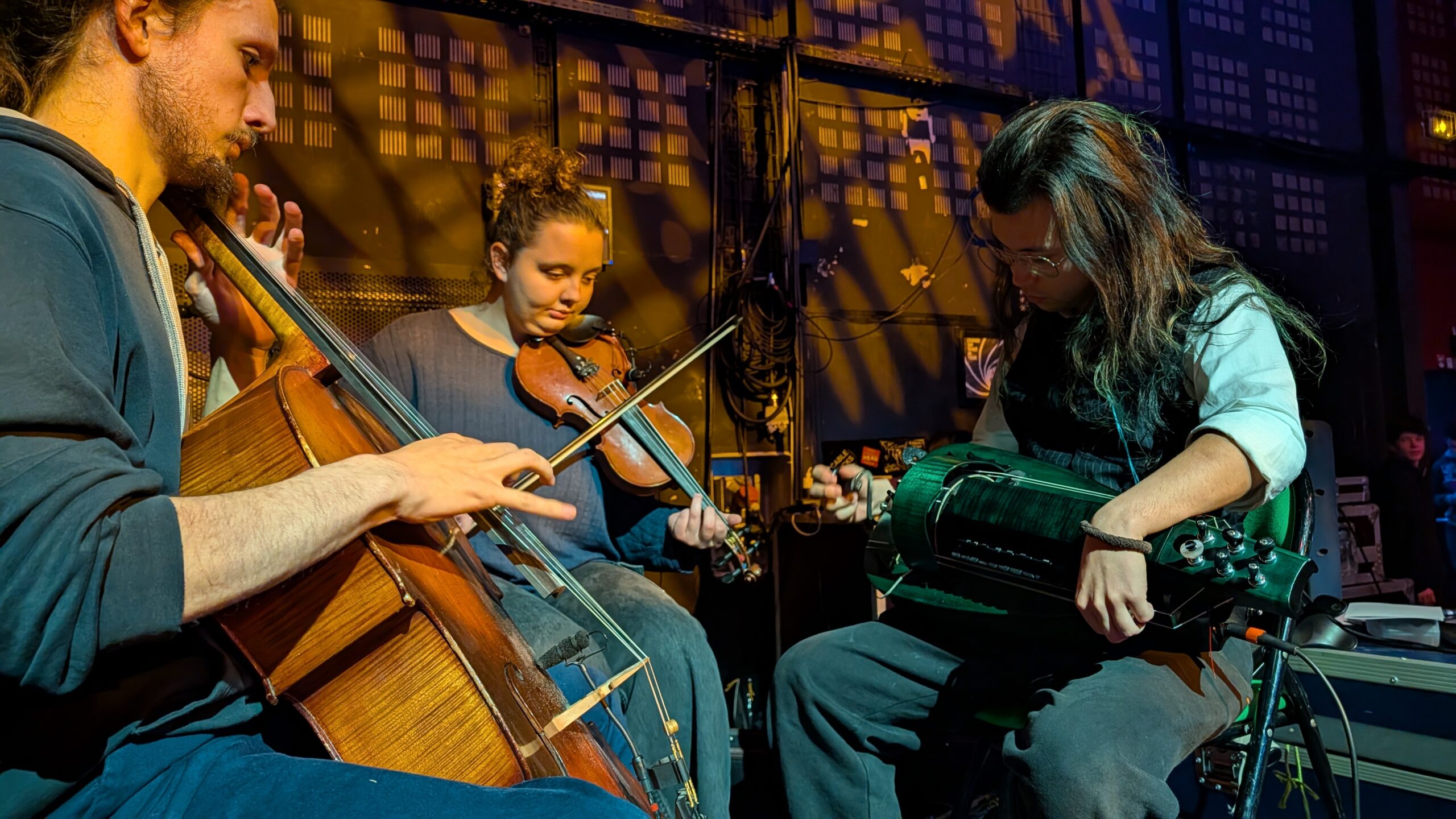
Learning relies on immersion whenever possible: mentorship, hands-on instrumental practice in most classes, observation, and active listening.
Singing and dancing are embeded into instrumental and cultural study and incorporated into most courses. Related art forms, such as traditional storytelling and field recording “collectage” methods, are addressed through dedicated modules.
A transversal approach is led for the artistic and research project, primarily through guided independent study—during the second and third years of the program.
The curriculum prepares students for a variety of positions by meeting artists in residency, projects and internships partnered with venues, training centers, and presenters (such as UPCP-Métive, Nouveau Pavillon, CERC, Garage Résidence, Caminaires, Drom, etc.), and training in operational management for creating a company or a collective, leading to skills for concerts and shows :
- Teaching musician, teaching in conservatoires or associative music schools (bachelor in instrumental/vocal pedagogy)
- Performing artist (instrumentalist and/or vocalist)
- Live performing arts, multidisciplinary artistic projects (music, dance, theater, etc.)
Partenariat européen
L’établissement est partenaire du projet européen TUNE (Erasmus +) avec quatre autres établissements supérieurs en Europe (Norvège, Espagne, Estonie) Ce partenariat donne lieu à des cours mutualisés en ligne et à une semaine intensive en immersion dans un des pays.

Teaching staff
Instrument lessons follow a companionship model. The teacher is proposed by the student, submitted to the approval of the department coordinator.
The specialized courses in traditional music involves a core pedagogical team as well as guest instructors who vary from year to year based on cultural regions and student group needs.
Hoëla Barbedette
Coordinator

Corentin Boizot-Blaise
Artistic advisor
Benoît Guerbigny
Traditional dance sorkshop
Heritage and its sources
Julien Padovani
Ensemble practices
Philippe Compagnon
Singing
Nolùen Le Buhé
Singing
Ariane Zevaco
History and aesthetics
Research paper in ethnomusicology
Eva Guillorel
History and aesthetics
Marion Labau
Heritage and its sources
Patrick Bardoul
Heritage and its sources
Jean-Marc Delaunay
Style, variation, organology, modality
Xavier Vidal
Style, variation, organology, modality
Kelly Thoma
Style, variation, organology, modality
Arnold Courset-Pintout
Current issues
Benjamin Macke
Current issues
Sylvain Girault
Current issues
Fransy Gonzalez
Current issues
Jakub Polaszcyk
Regional language and parlanjhe
Find out more